
TL;DR
This glossary defines the forklift hydraulic parts inside a forklift’s hydraulic system: the gear pump, lift/tilt/steering/telescopic cylinders, control and relief valves, orbitrol steering unit, hoses and seals, hydraulic oil and filters. Each entry covers what the part does, the symptoms when it fails, and the Kingstream warranty tier to choose: OEM genuine (12-month), OEM-equivalent (6-month), or aftermarket (3-month).
Abstract
Forklift hydraulic parts work together as one closed system: gear pump, lift/tilt/steering/telescopic cylinders, control and relief valves, orbitrol steering, hoses and seals, hydraulic oil and filters. This glossary defines each component, the symptoms when it fails, and how to choose the right replacement by quality tier.
Key Takeaways
- The gear pump, cylinders, and valves form one closed hydraulic circuit
- Mast drift with full oil usually means internal leakage, not low fluid
- Inspect the rod surface before buying a seal kit
- Kingstream warranty tiers: OEM 12-month, OEM-equivalent 6-month, aftermarket 3-month
- ISO VG32 vs VG46: pick by your forklift brand and operating temperature
Table of Contents
- Abstract
- Key Takeaways
- How a Forklift Hydraulic System Works
- Hydraulic Pumps: The Heart of the System
- Forklift Hydraulic Cylinders: Lift, Tilt, Steering & More
- Hydraulic Valves & Orbitrol Steering
- Hydraulic Hoses, Fittings & Seals
- Hydraulic Oil & Filters: Keeping the System Clean
- Commonly Confused Hydraulic Terms
- How This Glossary Is Maintained
- Further Reading
- FAQ
- Conclusion
- References
How a Forklift Hydraulic System Works
Every forklift hydraulic system is one closed oil circuit. Pascal’s law governs it: pressure applied to a confined fluid transmits equally in all directions (Britannica, n.d.). That single principle lets a small pump lift a full load, and it explains why forklift hydraulic parts act as one connected unit, not a collection of spares.
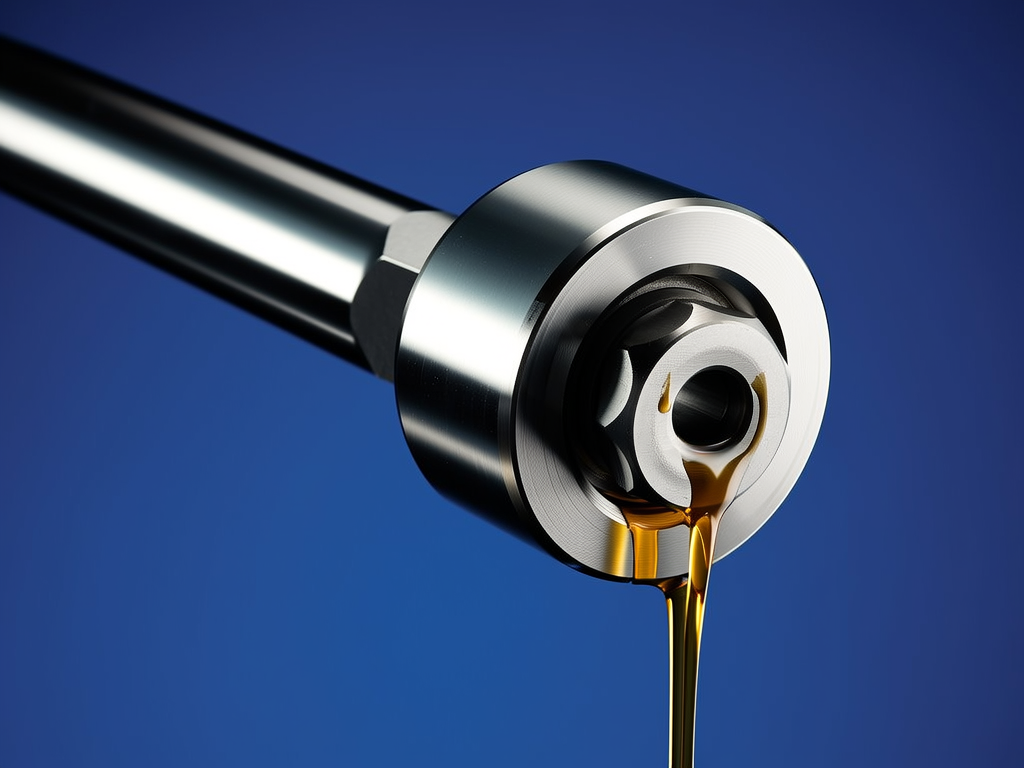
From pump to cylinder: how pressure does the work
The circuit runs in a fixed order. A pump builds flow, valves direct it, and cylinders convert it into motion. A gear pump draws oil from the reservoir and pushes it into the circuit. The multi-way valve and the orbitrol steering unit decide where that oil goes. A cylinder turns oil pressure into straight-line force, raising, tilting, or steering the truck. Keep this path in mind as you read the forklift hydraulic parts glossary below.
Under OSHA’s powered industrial truck standard (29 CFR 1910.178), a forklift must be examined at least once per shift before use, and a defective unit taken out of service (OSHA, n.d.). ANSI/ITSDF B56.1-2020 fills in the specifics: fluid held between the MIN and MAX marks, hoses free of leaks, cracks and bulges, rods free of scoring (ANSI/ITSDF B56.1, 2020).
By the Numbers
- 83 products in the forklift hydraulic components category
- 11 sub-categories, from pumps to orbitrol steering
- 1 closed hydraulic circuit from pump to cylinder (Britannica, n.d.)
Hydraulic Pumps: The Heart of the System
The gear pump is the forklift hydraulic pump on most lift trucks, and it builds the flow and pressure that drive every cylinder and valve downstream. When it fails, the mast slows and the pump whines, which is why it ranks high among the forklift hydraulic parts buyers inspect first.
Gear pump
-
Gear pump: a positive-displacement pump that moves hydraulic oil by meshing gears; oil trapped between the teeth is carried from the inlet side to the outlet, producing the flow and pressure behind the lift, tilt, and steering circuits. Slow lift with no visible external leak usually points to a worn gear set losing internal pressure.
-
Pump rebuild: replacing the seals and gear set in place when wear stays limited to those parts; the housings and shafts remain in service. On a heavily worn unit, replacement usually costs less than a full rebuild and brings a fresh warranty.
Pump cavitation and failure signs
-
Pump cavitation: what happens when air enters the suction line of a forklift hydraulic pump or the inlet is restricted; the pump whines, runs hot, and the gears wear progressively over time. Whine at high throttle with a sluggish mast is the classic symptom, and left unchecked, cavitation pits the gear teeth themselves.
-
Suction line: the low-pressure line that carries oil from the reservoir to the pump inlet; air leaking in here pulls bubbles into the flow and shows up as whine, heat, and a sluggish mast.
-
Hydraulic pump: the component that builds the flow and pressure behind every cylinder and valve in the circuit; on a forklift it is almost always a gear pump.
Most pump failures trace to the suction side, not the gears; a leaking inlet O-ring pulls air into the flow, the pump whines, runs hot, and lift slows. When replacement is needed, Kingstream covers OEM genuine units with a 12-month warranty, OEM-equivalent parts with 6 months, and aftermarket units with 3 months.
Forklift Hydraulic Cylinders: Lift, Tilt, Steering & More
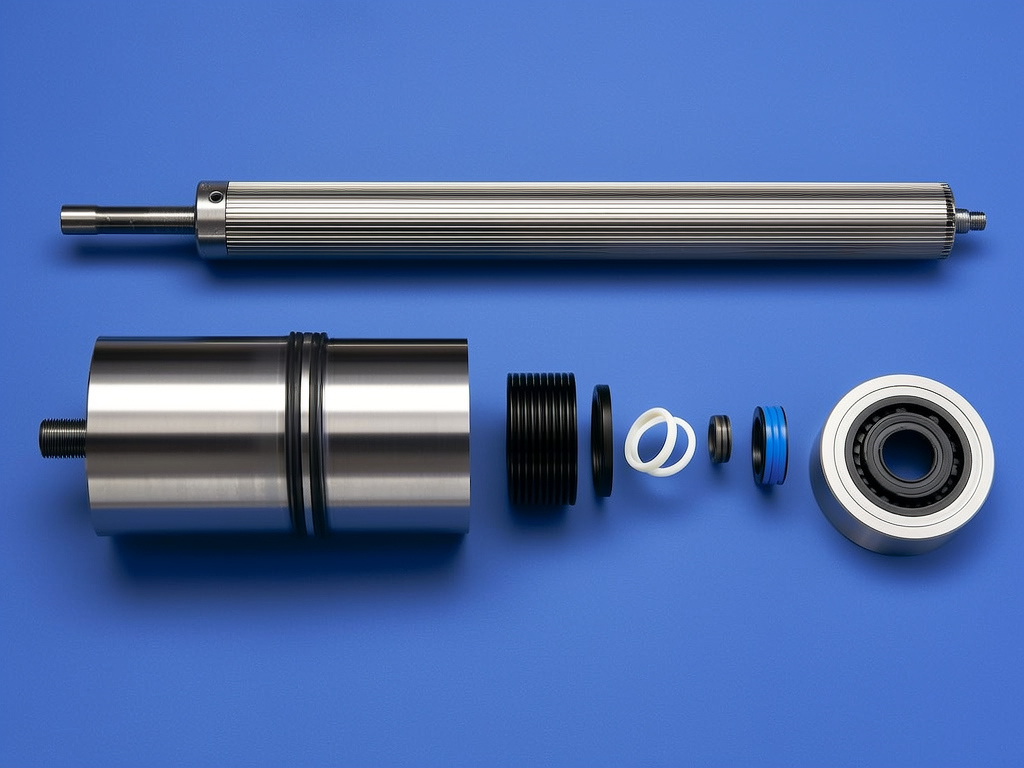
Cylinders turn hydraulic pressure into physical movement, and they are the most serviced group in any set of forklift hydraulic parts. A cylinder is a steel barrel, a chrome rod, and a piston sealed inside. Rods extend and retract with every mast cycle, so wear concentrates here. Nearly every forklift hydraulic parts job involves one of five cylinder types.
- Hydraulic cylinder: the actuator that turns oil pressure into linear force; a steel barrel, a chrome piston rod, and a piston sealed inside.
Lift and tilt cylinders
-
Lift cylinder: raises and lowers the mast and forks, handling full rated capacity on every cycle.
-
Tilt cylinder: tips the mast forward and back so operators place and release loads cleanly. A leaking rod seal shows up as an oil film on the rod and lazy tilt.
These two carry the heaviest duty and are the pair most commonly replaced from a forklift hydraulic parts catalog.
- Piston: the moving element inside the barrel that converts oil pressure into force on the rod; a worn piston seal is the usual source of internal leakage and mast drift.
| Cylinder type | Function | Common failure | Typical symptom |
|---|---|---|---|
| Lift | Raises and lowers the mast and forks | Worn piston seal or valve spool | Forks drift down with a full reservoir |
| Tilt | Tips the mast forward and back | Leaking rod seal | Oil film on the rod, lazy tilt |
| Steering | Turns the steer wheels via the orbitrol valve | Internal bypass, air in circuit | Heavy or jerky steering |
| Telescopic | Stages extension for high-reach lifts | Worn stage seals | Stage creeps or stops short |
| Side shift | Moves the carriage side to side | Bent rod, worn wiper seal | Carriage drifts or shifts slowly |
A 2023 study modeled forklift hydraulic actuator internal leakage with the bond graph method and showed the leakage is detectable in the actuator dynamics before the truck shows obvious trouble (Nugroho et al., 2023). Mast drift with a full reservoir, the symptom fleet buyers ask about most, points to leakage past the piston seal or valve spool rather than low fluid.
Steering and telescopic cylinders
-
Steering cylinder: turns the steer wheels, and on most modern trucks it is driven by the orbitrol steering valve rather than a direct mechanical link.
-
Telescopic cylinder: uses two or more nested stages that extend in sequence, which is how high-reach masts and order pickers gain travel without a taller barrel.
Side shift cylinders
Side shift cylinder moves the carriage left and right, letting the operator square the forks to the load without repositioning the truck. A worn wiper seal shows up as a slow drift long before a hard failure.
Seal kits and rod condition
Inspect the chrome rod for scoring or pitting before you fit a new seal kit. New seals on a damaged rod fail fast, because the damaged surface cuts the lip on the first strokes. A clean rod keeps a seal kit rebuild economical; a scored rod pushes the job toward a new cylinder. Kingstream sells lift and telescopic cylinders, and every unit carries one of three warranty tiers when bought as forklift hydraulic parts: OEM genuine at 12 months, OEM-equivalent at 6 months, aftermarket at 3 months.
-
Piston rod: the chrome-finished rod that extends from the cylinder; scoring or pitting on its surface defeats any seal kit fitted to it.
-
Seal kit: a replacement set of rod seal, wiper seal, O-rings, and backup rings for one cylinder; it restores a tired actuator when the rod surface is still sound.
Ready when you are
Once this glossary has named the part, the next step is matching it to your machine. Kingstream sources OEM-compatible forklift parts across 14 major brands and sends a fast quotation, so you can confirm the part number before you order. Request a quotation
Hydraulic Valves & Orbitrol Steering
The valve group is the decision layer of any forklift hydraulic parts system. Directional valves choose which circuit gets oil, relief and speed limit valves set its pressure and pace, and the orbitrol unit turns steering input into wheel angle.
Control and directional valves
- Multi-way directional control valve: This spool valve routes oil to whichever cylinder circuit the operator selects, typically lift, tilt, and one or more auxiliary functions. Sliding the spool opens one port pair and blocks the rest. On a truck with sideshift, the auxiliary spool carries that cylinder’s flow, so a sluggish or jerky sideshift points here before it points at the pump.
Relief and speed limit valves
Two forklift hydraulic parts decide how hard the system pushes and how fast it moves.
-
Relief valve: A pressure limiter that opens at a set point to protect the system from over-pressure, calibrated to the forklift’s rated pressure. Its job is protective: when the lift cylinder stalls against the mast stops, the valve opens and recirculates oil instead of letting pressure climb until a hose bursts. Set too low, every function feels weak. Set too high, hard line failures become likely.
-
Speed limit valve: A flow meter that holds a function to a controlled speed, most visibly during mast lowering. Left ungoverned, the weight of a loaded carriage can pull oil through the cylinder faster than the pump supplies it, so the mast drops with a slam. It throttles that return flow so lowering stays smooth even under a full load.
Orbitrol steering units
The orbitrol is the forklift hydraulic parts unit that handles steering with no mechanical linkage.
- Orbitrol steering unit: A steering control unit, also called hydrostatic steering, that pairs a metering pump with a control valve so steering wheel position sets the wheel angle directly. Rotating the wheel meters a proportional oil volume to the steering cylinder, so the two must be matched. Kingstream supplies orbitrol steering units, including Toyota-spec models, with a 12-month warranty on OEM genuine units.
Before replacing the orbitrol: A steering complaint is often misattributed to the orbitrol when the real fault is a clogged relief plug, the wrong-type supply hose, or air in the system. Bleed the steering circuit and check the plug and supply line first.
Forklift hydraulic parts in the valve group work as one pressure-governed loop. The multi-way directional valve routes oil to the lift, tilt, or auxiliary circuit, the relief valve caps pressure at the truck’s rating, and the orbitrol steering unit turns steering wheel position into wheel angle with no mechanical linkage. OEM genuine orbitrol units carry a 12-month warranty.
Hydraulic Hoses, Fittings & Seals
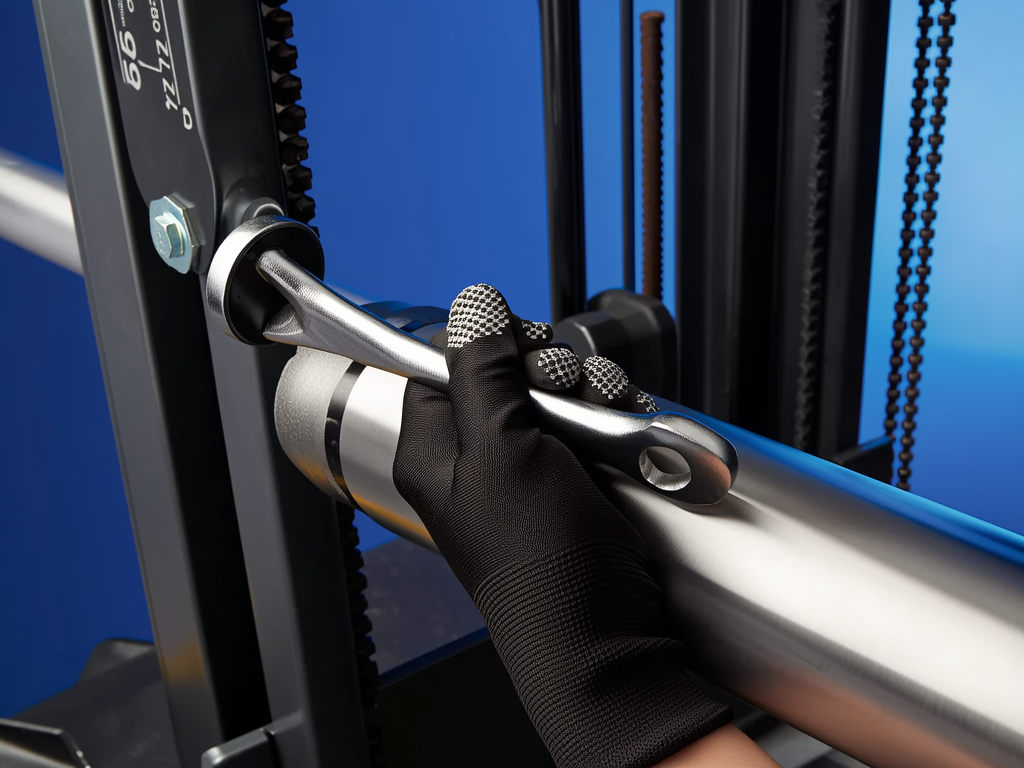
Hoses, fittings and seals carry the pressure that pumps, valves and cylinders convert into motion, and they are the forklift hydraulic parts most likely to fail.
Hydraulic hoses and SAE ratings
Hydraulic hose is not generic rubber. SAE J517 is the governing standard, and 100R17 covers fabricated, forklift-class assemblies rated at no less than 3,000 PSI (SAE International, 2023).
Most failures trace to four avoidable causes: abrasion and wear, age hardening, a rating below circuit pressure, and overtightened or corroded fittings. Asked what causes forklift hydraulic hose failure, lines usually fail at the ends or where they rub a frame.
- SAE 100R17 hose: a steel-wire-reinforced, factory-fabricated hydraulic hose rated at no less than 3,000 PSI (SAE International, 2023). It is the typical pressure and return line on a mast assembly.
Fittings, O-rings and backup rings
The fitting is where an assembled line usually fails. A poorly crimped fitting is a common failure point in fabricated hose assemblies, so inspect the joint between ferrule and hose as closely as the hose body.
-
O-ring: the basic static and dynamic seal at fittings and joints, a circular rubber ring compressed between two surfaces. On a forklift it seals the port between a hose fitting and a cylinder body.
-
Backup ring: a hardened ring set beside an O-ring to stop it extruding into the gap under high pressure. Expect one paired with an O-ring at a valve port.
-
Hydraulic fitting: the connector that joins a hose to a valve port or cylinder body; the O-ring at the port is what prevents a leak under pulse pressure.
Wiper seals
-
Wiper seal: a lip seal at the outer end of a cylinder that scrapes contamination off the rod as it retracts. It keeps dirt out of the barrel and protects the rod seal and bore.
-
Rod seal: the inner seal that wipes the rod and holds the load on a lift cylinder; when it leaks, the rod shows an oil film and the forks settle.
Warning: Never reuse an O-ring or backup ring pulled out of a working joint. A compressed O-ring leaks, and a fresh seal kit costs far less than the labor to swap the assembly.
Kingstream supplies hose assemblies and seal kits for 14 major forklift brands, with OEM genuine parts on a 12-month warranty, OEM-equivalent 6, aftermarket 3.
SAE 100R17 assemblies are rated at no less than 3,000 PSI under SAE J517 (SAE International, 2023), and most forklift hose failures are avoidable. The usual causes are abrasion, age hardening, a rating below circuit pressure, and overtightened or corroded fittings, so verifying the rating before reuse prevents a line burst.
Hydraulic Oil & Filters: Keeping the System Clean
Hydraulic oil and the filter that cleans it set the service life of every pump, cylinder, and valve in a forklift hydraulic parts system (Sehlstedt & Sellen, 2022).
ISO VG32 vs VG46 hydraulic oil
The ISO viscosity grade names the oil’s thickness. VG32 is lighter, chosen for cold climates and quick-response circuits; VG46 is heavier and the standard for warmer conditions. The right grade follows the forklift brand and operating environment. The trade-off is in the operating range: VG32 flows more easily through the system on cold starts, while VG46 keeps its film strength when the oil runs hot.
| Property | ISO VG32 | ISO VG46 |
|---|---|---|
| Viscosity meaning | Lighter oil | Heavier oil |
| Typical use | Cold climates, quick-response circuits | Warmer conditions, standard for most forklifts |
| Operating temperature | Best at lower ambient temperatures | Suited to higher operating temperatures |
For "what type of hydraulic fluid does a forklift use", the answer is one of these two grades, matched to the brand and climate.
Filters and contamination control
The hydraulic filter removes particles from the circulating oil in a forklift hydraulic parts system; a clogged element restricts flow and accelerates component wear. The reservoir stores the oil, letting air separate and contaminants settle.
For "how often should I change the hydraulic oil in a forklift", follow the OEM’s published interval for your model. An interval that fits a heated warehouse will not fit a cold dock.
When you replace filters and related forklift hydraulic parts, the warranty follows the part class: OEM genuine parts carry 12 months, OEM-equivalent 6 months, aftermarket 3 months.
Contamination control is the leading lever on forklift hydraulic life, and it is a measurable maintenance concern. A 2022 thesis from Linköping University studied contamination-level detection in hydraulic pressure filters, treating clogged-element wear as an avoidable failure rather than a given (Sehlstedt & Sellen, 2022). The right ISO VG grade is set by the truck’s brand and climate.
Glossary
- Hydraulic filter: removes particles from the circulating oil; a clogged element restricts flow and accelerates wear.
- Hydraulic reservoir: stores the oil, lets air separate, and allows contaminants to settle.
- ISO viscosity grade: a measure of oil thickness; VG32 suits cold climates, while VG46 is standard for warmer conditions.
- Hydraulic oil: the working fluid that transfers power and lubricates the pump and valve spools; the grade sets how the truck performs in your climate.
- ISO VG32: a lighter hydraulic oil grade for cold climates and quick-response circuits; it thins at high operating temperature, so it is not the choice for a hot warehouse.
- ISO VG46: the heavier standard grade for warmer conditions and most forklift fleets; it keeps film strength at temperature and keeps the mast circuit firm.
- Hydraulic fluid contamination: particles and sludge in the circulating oil, a leading preventable cause of component wear (Sehlstedt & Sellen, 2022).
Important to note: this glossary is a reference, not a substitute for the OEM service manual for your forklift model. Confirm the part number and pressure rating against the truck’s published specifications before you order.
Commonly Confused Hydraulic Terms
Forklift hydraulic parts that sound interchangeable often are not. Name the function, not just the part.
Relief valve vs speed limit valve
The relief valve is a safety limiter protecting the whole hydraulic system from over-pressure. The speed limit valve meters flow to control one function’s speed, such as mast lowering.
Lift cylinder vs tilt cylinder
The lift cylinder raises and lowers the mast and forks vertically. The tilt cylinder tilts the mast forward and back for load placement. They are not interchangeable.
| Confused pair | What it does | What tells them apart |
|---|---|---|
| Relief valve vs speed limit valve | Relief guards the system from over-pressure; speed limit meters one function’s flow | System-wide safety vs single-function speed |
| Lift cylinder vs tilt cylinder | Lift moves forks vertically; tilt tips the mast for placement | Axis of motion |
| Gear pump vs orbitrol | Gear pump feeds all circuits; orbitrol meters the steering circuit | Source vs steering meter |
Ordering the wrong forklift hydraulic part class costs time and downtime, so match the part to the machine’s duty. Kingstream backs that match with three warranty tiers: OEM genuine parts carry 12-month coverage, OEM-equivalent parts 6 months, and aftermarket parts 3 months.
How This Glossary Is Maintained
Maintenance of this forklift hydraulic parts glossary is anchored to OSHA 29 CFR 1910.178, the powered industrial truck inspection and safe operation rule, and ANSI/ITSDF B56.1-2020, the current edition of the forklift safety and maintenance standard (OSHA, n.d.; ANSI/ITSDF B56.1, 2020). Every definition is checked against those requirements so the guidance tracks what inspectors and operators are required to follow.
Kingstream’s parts specialists review each entry as OEM changes and new part families emerge. Quality-tier notes, including the OEM genuine 12-month, OEM-equivalent 6-month, and aftermarket 3-month warranty coverage, are drawn from the warranty terms published on the site. We keep the definitions aligned with those published terms rather than with marketing claims, so buyers can compare tiers on equal terms. We reviewed the 83 product listings in the forklift hydraulic components category as part of building this glossary, and every definition is checked against the standards and studies listed below.
This edition was last updated in August 2026. When a new term enters common use, or an OEM changes how a component is named or specified, this page is updated to reflect it.
Further Reading
This glossary is the reference hub for forklift hydraulic parts. It defines each component, how it works, and where it sits in the system. When the goal shifts from terminology to diagnosis, the companion articles go deeper. The forklift hydraulic components category page is the product side of this glossary, listing 83 parts across 11 sub-categories, so a term from this glossary maps to a specific part. The steering cylinder troubleshooting guide walks through failure symptoms, test steps, and the repair decision tree for one of the most common wear points. The hydraulic cylinder replacement article covers teardown and seal service, plus the reassembly sequence. The OEM vs aftermarket parts guide lays out the three warranty tiers (OEM genuine 12 months, OEM-equivalent 6 months, aftermarket 3 months) so you can weigh cost against coverage before ordering. Keep this glossary open while you work through them; it is the quick reference that ties every article back to the system.
FAQ
How often should I change the hydraulic oil in a forklift?
Follow the OEM’s published change interval for your exact model. An interval that fits a heated warehouse will not fit a cold dock, because operating temperature changes how fast contamination builds up and which ISO VG grade the system needs. Inspect the fluid level and condition between changes, and replace the filter on the same schedule.
Why is my forklift not lifting or lifting slowly?
Slow lift with no visible external leak usually points to a worn gear set losing internal pressure, or a suction-side air leak pulling air into the flow. Check the inlet O-rings before replacing the pump. A whine at high throttle with a sluggish mast is the classic cavitation symptom, and a relief valve set too low makes every function feel weak.
Why are my forklift forks slowly drifting down?
Mast drift with a full reservoir points to internal leakage past the piston seal or valve spool, not low fluid. A 2023 study showed that leakage is detectable in the actuator dynamics before the truck shows obvious trouble (Nugroho et al., 2023). Reseal the cylinder or service the control valve spool.
How much does it cost to repair or replace a forklift hydraulic cylinder?
The cost hinges on rod and seal condition. A clean, unscored chrome rod keeps a seal-kit rebuild economical; a scored or pitted rod pushes the job toward a new cylinder, because new seals on a damaged rod fail on the first strokes. Replacement parts carry Kingstream’s three warranty tiers: OEM genuine 12 months, OEM-equivalent 6 months, aftermarket 3 months.
What causes forklift hydraulic hose failure?
Most failures trace to four avoidable causes: abrasion and wear, age hardening, a rating below circuit pressure, and overtightened or corroded fittings. Lines usually fail at the ends or where they rub a frame. Spec SAE 100R17 assemblies rated at no less than 3,000 PSI (SAE International, 2023) and verify the rating before reuse.
What type of hydraulic fluid does a forklift use (ISO VG32 vs VG46)?
The answer is an ISO VG grade, usually VG32 or VG46. VG32 is lighter and suits cold climates and quick-response circuits; VG46 is heavier and the standard for warmer conditions. Match the grade to your forklift brand and operating environment, not to a generic all-purpose fluid.
Conclusion
This glossary has walked the single closed circuit that drives every forklift hydraulic function: the gear pump builds the flow, the valves direct it, and the cylinders convert it into lift, tilt, steering, and side shift. It defines more than 30 key terms, each tied to the failure symptom it produces, so a diagnosis in the field maps to a replacement part. When you order, the same three warranty tiers apply: OEM genuine at 12 months, OEM-equivalent at 6 months, and aftermarket at 3 months. Match the part to the machine’s duty, confirm the part number against the 83 listings in the forklift hydraulic components category, and let the tier settle the trade-off between cost and coverage.
References
- Occupational Safety and Health Administration. (n.d.). Powered industrial trucks (29 CFR 1910.178). U.S. Department of Labor. https://www.osha.gov/laws-regs/regulations/standardnumber/1910/1910.178
- American National Standards Institute. (2020). Safety standard for low lift and high lift trucks (ANSI/ITSDF B56.1-2020). ANSI Webstore. https://webstore.ansi.org/standards/ansi/ansiitsdfb562020
- SAE International. (2023). Hydraulic hose (SAE J517). SAE International. https://www.sae.org/standards/content/j517_202304/
- Nugroho, R. S., Bahiuddin, I., Prabakara, H. A., Chazim, R. R., Leman, Z. A., & Mohammed Ariff, M. H. (2023). A dynamic modelling of forklift hydraulic actuator internal leakage using bond graph method. International Journal of Heavy Vehicle Systems, 30(3), 380-399. https://doi.org/10.1504/IJHVS.2023.132996
- Sehlstedt, O., & Sellen, E. (2022). Contamination level detection of hydraulic pressure filters in forklifts [Bachelor’s thesis, Linköping University]. DiVA. https://www.diva-portal.org/smash/record.jsf?pid=diva2%3A186470
- Encyclopaedia Britannica. (n.d.). Pascal’s principle. Encyclopedia Britannica. https://www.britannica.com/science/Pascals-principle
Last reviewed and updated: August 2026. Author: Kingstream team. For tailored guidance, contact our team.