The mast is the vertical structure at the front of the forklift that raises, lowers, and tilts the load. Everything the forklift lifts — every pallet, every crate, every ton of cargo — hangs on the mast assembly. A worn mast roller causes the mast channels to bind and chatter during lifting. A stretched or broken leaf chain can drop the carriage and load without warning. A bent fork is a structural failure waiting to happen. Mast parts operate under continuous tension and side-loading with safety factors as low as 3:1 — there is no margin for neglected maintenance.
Kingstream supplies replacement mast components for 15+ forklift brands including Toyota, Komatsu, HELI, CAT, Mitsubishi, and Hangcha. Every fork is manufactured to ISO 2330 and load-tested. Every leaf chain is proof-loaded to OEM breaking strength. Every roller is hardened to OEM Rockwell specification.
Complete Forklift Mast Parts Catalog:
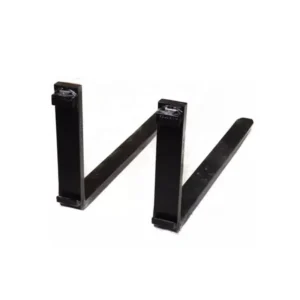
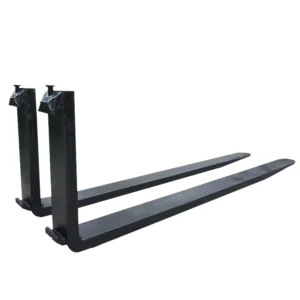
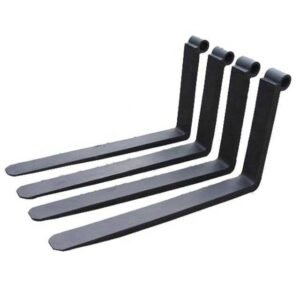
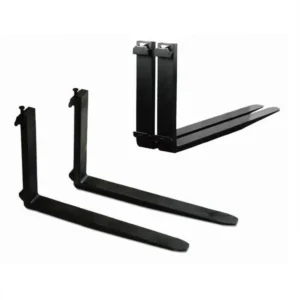
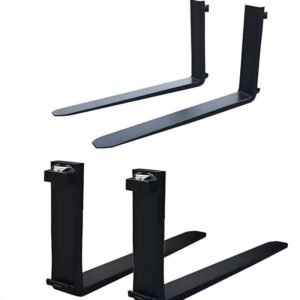
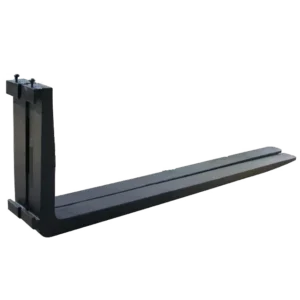
Forklift Fork — The forged steel tines that slide under the load and carry it during transport. Forks are the single most safety-critical component on a forklift — a fork failure under load can cause the load to fall, the forklift to tip forward, and the operator to be crushed. Forks wear on two surfaces: the heel (where the vertical shank meets the horizontal blade — the highest stress point) and the blade tip (from sliding on the floor). Fork wear must be checked at every PM inspection using a fork caliper — when the heel thickness reaches 90% of original, the fork must be replaced. Never weld, straighten, or heat a fork — it changes the metallurgical structure and invalidates the load rating. We stock ITA Class II, III, and IV forks with correct carriage hook dimensions and load center ratings.
Forklift Mast Chain — Also called leaf chain or lift chain. The mast chain connects the lift cylinders to the carriage through a system of pulleys and chain anchors. When the lift cylinder extends, it pulls the chain over the mast pulleys, lifting the carriage at twice the cylinder stroke speed (2:1 reeving on a standard simplex mast). Mast chains stretch over time from continuous tension loading — when elongation reaches 3% of the original pitch length across a 12-link measurement, the chain must be replaced. Chain failure under load is catastrophic — the carriage free-falls with no hydraulic cushion. We stock BL and LH series leaf chain in correct pitch and number of link plates for Toyota, Komatsu, HELI, and universal mast assemblies. Always replace chains as a matched pair — a new chain paired with a worn chain creates unequal lifting forces that bind the mast.
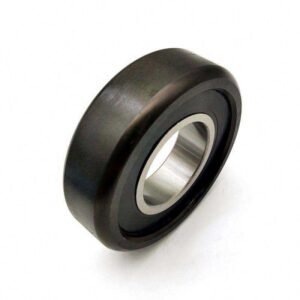
Forklift Mast Roller — Hardened steel rollers mounted on bearings that guide the mast channels as they extend and retract. Mast rollers operate in two orientations: main rollers (carry the forward/backward thrust load between mast stages) and side thrust rollers (carry the side-to-side load, preventing mast sway). Worn rollers develop flat spots that cause the mast to chatter and bounce during lifting — the load appears to shake. Worn roller bearings cause the roller to skid instead of roll, wearing a groove in the mast channel — a far more expensive repair. We stock main rollers and side thrust rollers with correct OD, bearing ID, and width for Toyota, Komatsu, HELI, and CAT mast assemblies.
Forklift Mast Assembly — Complete mast unit including all channels (outer, intermediate, inner), lift cylinders, chains, rollers, carriage, and hose sheaves — ready to mount on the forklift chassis. Mast replacement is indicated when multiple channels are worn from roller grooving, multiple rollers require replacement, and the cost of individual component replacement approaches the cost of a complete assembly. We stock simplex (2-stage), duplex (3-stage), and triplex (3-stage free-lift) mast assemblies with correct mounting bracket dimensions and lift heights.
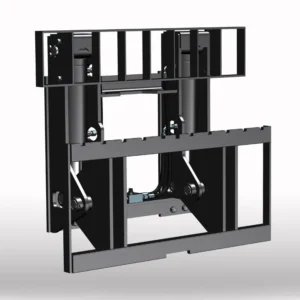
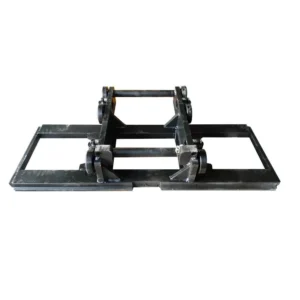
Forklift Fork Carriage — The steel frame that the forks hang on and that travels up and down the mast on rollers. The carriage includes the fork bar (top hook bar) and the load backrest. Fork positioning notches on the fork bar wear over time — worn notches allow the forks to slide during operation, changing the fork spacing and potentially unbalancing the load. We stock ITA-standard carriages with correct fork bar dimensions and roller mounting points.
Forklift Fork Pin — The locking pin or spring-loaded latch that secures each fork to the carriage fork bar, preventing the fork from sliding off during operation. A missing or broken fork pin allows the fork to slide freely on the bar — the fork can slide completely off one side, dropping the load. Always check both fork pins are engaged before operating the forklift. We stock fork pins with correct diameter, length, and spring tension for ITA-standard carriages.
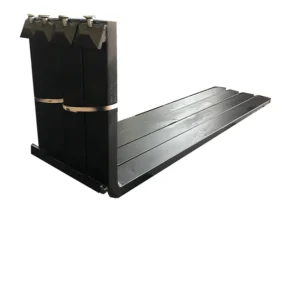
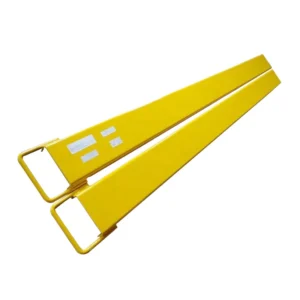
Forklift Fork Sleeve — Also called fork extensions or fork covers. Steel sleeves that slide over the existing fork blades to extend their length or increase their width for handling oversized loads. Fork sleeves must be pinned or secured in place — never rely on friction alone. Using fork extensions changes the load center and reduces the forklift’s rated capacity — consult the capacity data plate with the fork extension length to calculate the derated capacity. We stock fork sleeves in common length extensions with correct internal dimensions.
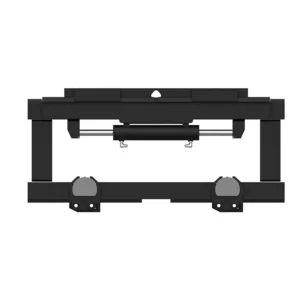
Forklift Side Shifter — A hydraulic attachment that mounts between the carriage and forks, allowing the operator to shift the forks left and right without repositioning the entire forklift. A side shifter can reduce load placement time by 20-30% in narrow-aisle operations. Hydraulic hose routing must include a flow divider or pressure-compensated valve to ensure equal shift speed in both directions. We stock side shifters with correct carriage class, fork bar dimensions, and hydraulic flow requirements.
Fork Inspection Checklist (ISO 5057):
• Check fork heel thickness — Measure with a fork caliper. Replace if heel thickness ≤ 90% of original.
• Check fork blade straightness — The blade tip must not deviate more than 0.5% of the blade length from the shank plane.
• Check fork blade wear — The blade thickness at the heel must not be less than 90% of original.
• Check mast chain elongation — Measure 12 links (24 pitches) of chain with no tension. Replace if elongation exceeds 3%.
• Check mast roller condition — Rotate each roller by hand. Any roughness, flat spots, or excessive bearing play requires replacement.
• Check fork pins — Both fork pins must engage fully and lock in place. No missing or deformed springs.
• Check for cracks — Visually inspect forks, carriage, and mast channels for cracks using a bright light. Cracks at the fork heel, carriage welds, and chain anchor points are the most common locations.
Whether you need a pair of replacement forks for a Toyota 8FGCU25, a complete mast roller set for a HELI CPCD30 triplex mast, or replacement leaf chains for a Komatsu FD25 duplex mast, we ship from stock within 24 hours. No minimum order. Send us your forklift model and mast specifications for a quote →