
Forklift Steering linkage
Categories
-
Forklift Steering linkage
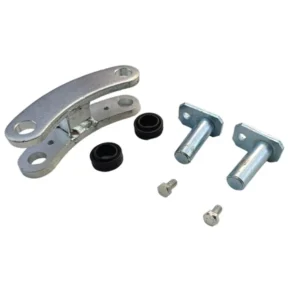
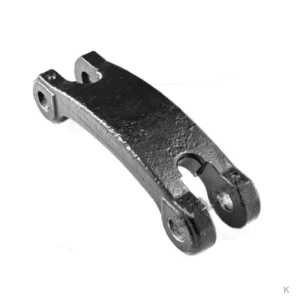
Forklift Parts 2029624 Steering Link for Hyster J2.50EX
$69.99 Add to cart -
Forklift Steering linkage
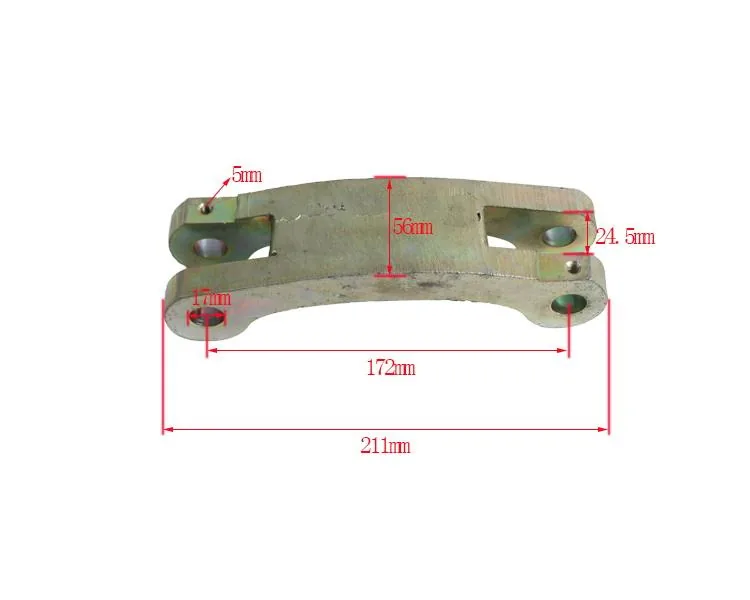
Forklift Steering Drag Link A21B4-32081 – 2-3.5T Linkage
$3.00 Add to cart -
Forklift Steering Axle
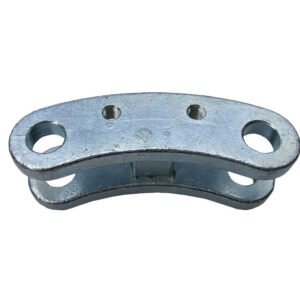
Steering Cylinder Link 912439602 – Yale Electric Diesel Forklift Trucks
$196.00 Add to cart -
Forklift Steering linkage
Toyota Forklift Steering Link Kit 43752-23442-71 43731-23442-71 – 7F 8F
$28.99 Add to cart
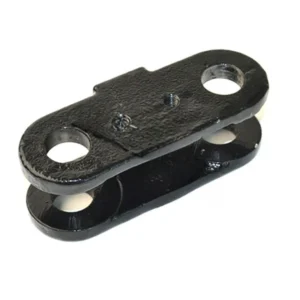
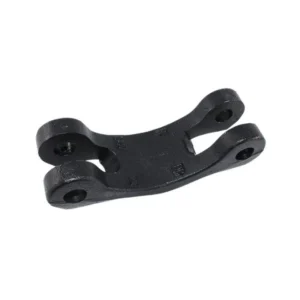
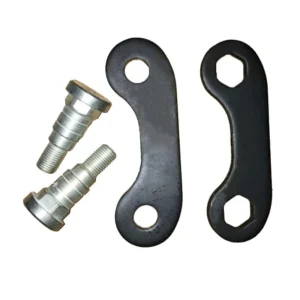
Forklift Steering Linkage: Drag Links, Tie Rods & Steering Links for Forklift Steer Axles
A forklift steering linkage is the mechanical connection between the steering cylinder and the steer wheels — it converts the linear motion of the hydraulic cylinder into the angular rotation that turns both rear wheels in unison. When a steering linkage component wears or bends, the forklift develops steering play, wanders from a straight path, and wears tires unevenly. Kingstream stocks replacement forklift steering linkages including drag links, tie rods, and steering links for Hyster, HELI, Toyota, Komatsu, and Hangcha forklifts. Every linkage is measured for length, joint play, and thread condition before shipment.
Drag Links vs Tie Rods — Understanding the Steering Linkage
The forklift steering linkage on a rear-steer forklift consists of several interconnected components. The drag link connects the steering cylinder rod to one of the steering knuckles — when the cylinder extends or retracts, the drag link pushes or pulls the knuckle, rotating that wheel. A tie rod connects the left and right steering knuckles together, ensuring both wheels turn at the correct relative angle — the inner wheel must turn more sharply than the outer wheel because it follows a tighter radius, a relationship called Ackermann steering geometry that the tie rod length and attachment points are precisely calculated to achieve. Steering links are individual connecting rods with ball joints or spherical bearings at each end that connect various points in the forklift steering system — they are the most frequently replaced steering linkage component because the ball joints wear with every turn of the steering wheel, eventually developing play that translates to steering wheel free play and imprecise tracking.
Signs Your Steering Linkage Needs Replacement
A worn forklift steering linkage creates handling problems that worsen progressively. The most noticeable sign is steering wheel free play — the steering wheel can be turned several degrees before the rear wheels begin to move, indicating worn ball joints in the drag link or tie rod ends that have developed internal clearance. The forklift wanders or requires constant small steering corrections to maintain a straight path, especially on smooth floors where road camber is not a factor — this points to a forklift drag link or tie rod with enough joint play that wheel toe changes dynamically as the linkage moves. Uneven tire wear, where one steer tire wears faster on the inner or outer shoulder, indicates incorrect toe setting caused by a bent tie rod or a forklift steering link that has been struck by debris or a collision and is no longer the correct length. A knocking or clunking sound from the rear axle when turning the steering wheel, especially when transitioning from left to right, is the sound of a ball joint with excessive clearance bottoming out in its socket. In severe cases, complete separation of a ball joint from its socket causes total loss of steering control — this is why any forklift steering linkage component found to have play during inspection must be replaced before the forklift returns to service.
Popular Steering Linkage Cross-Reference
| OEM Part No. | Linkage Type | Compatible Models |
|---|---|---|
| 2029624 | Steering link | Hyster J2.50EX |
| A21B4-32081 | Steering drag link assembly | HELI forklift series |
Need a linkage not listed? Send us your OEM part number and model for cross-reference to the correct forklift steering linkage.
Quality Control at Kingstream
Every forklift steering linkage component we ship is measured and tested for the parameters that affect steering precision. Overall length is measured center-to-center between the ball joint studs to confirm the linkage sets the correct toe angle — a linkage that is even 2mm off-spec changes the toe setting and causes rapid tire wear. Ball joint rotational torque and articulation angle are checked to confirm smooth movement through the full range of steering motion without binding — a stiff joint loads the steering cylinder unnecessarily and causes uneven steering effort. Thread condition on adjustable tie rods and drag links is checked with go/no-go gauges to confirm the lock nut and adjusting sleeve threads are clean and undamaged — stripped threads prevent proper toe adjustment during alignment. Ball joint dust boots are inspected for tears or dry rot that would allow contamination into the joint, accelerating wear. You receive a forklift steering rod that sets the correct toe, articulates smoothly through full lock, and holds its adjustment — not one with a tight ball joint that causes the steering to stick and then release unpredictably during a turn.
Steering wheel has too much play? Send us your part numbers for a fast quote on forklift steering linkages. For other steering components, browse our complete forklift steering axle parts catalog.
8 Product Categories In Stock
Engine, brake, hydraulic, electrical, steering & axle, cooling system, transmission, and maintenance parts — one partner for all your forklift spare parts needs.
OEM Cross-Reference Matching
Send us an OEM number, part photo, or forklift model. We cross-match against our database before quoting — no guesswork, no wrong parts shipped.
Global Shipping to 78+ Countries
Express courier (3-5 days) or sea freight for bulk orders. Export packing included. Tracked shipping on all orders. Typical lead time: 24h for in-stock items.
Can't Find What You Need?
We offer 24h service — send us your part number or inquiry and we'll get back to you within 24 hours.