
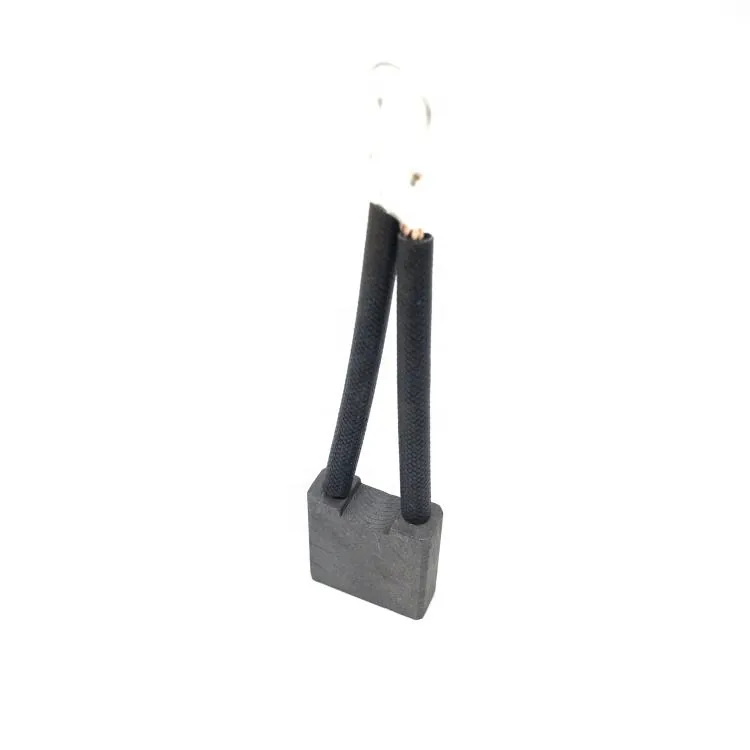
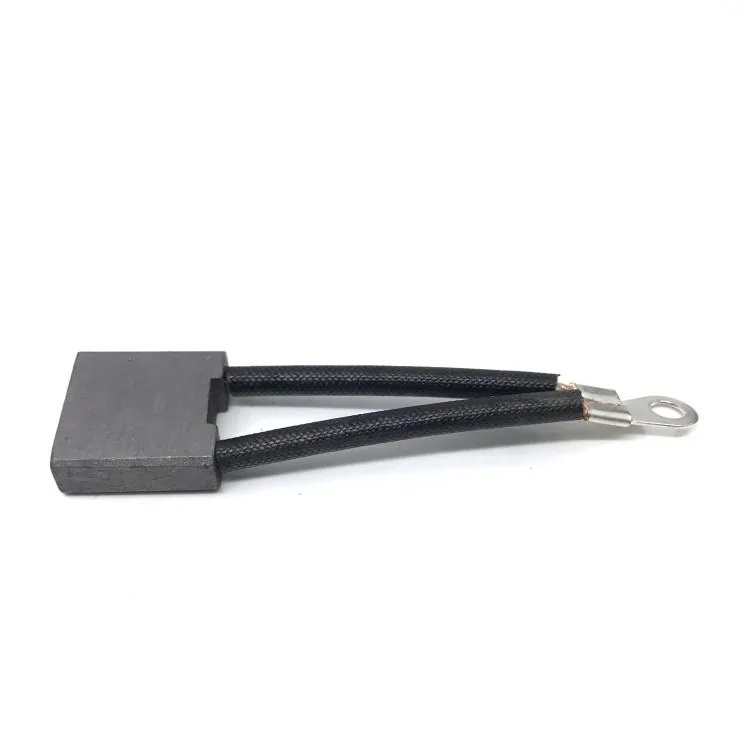
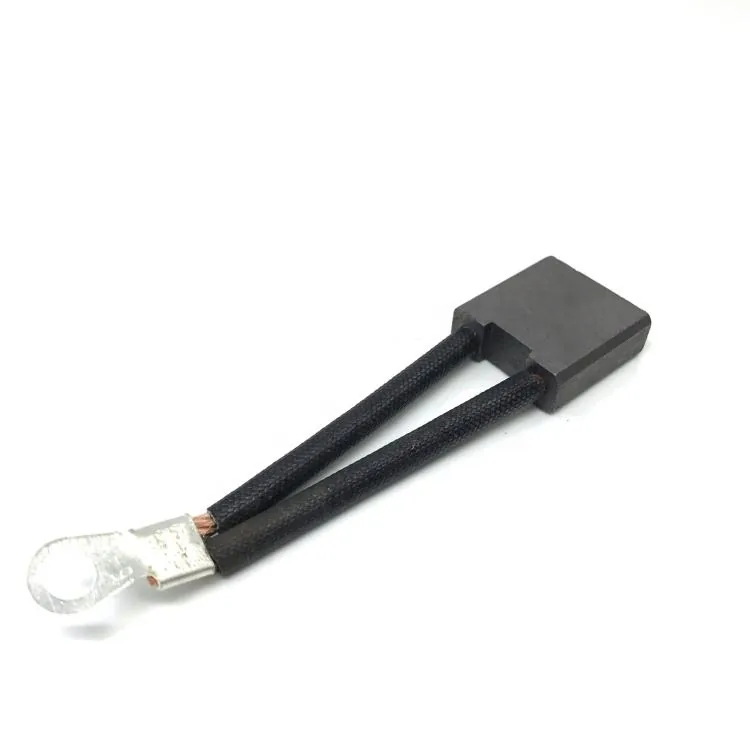
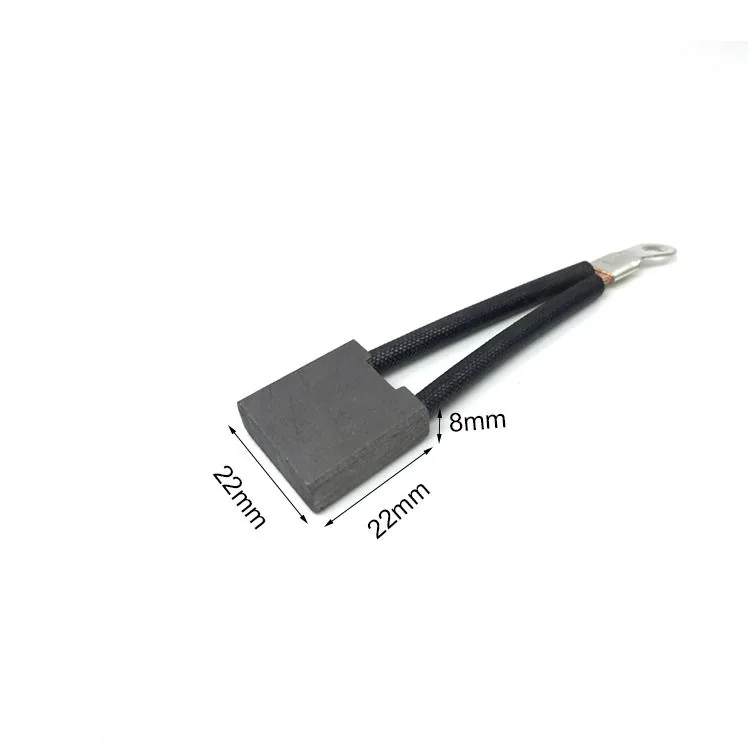
J201 Customized Half of Copper 8_22_22mm Graphite Forklift Carbon Brushes for Electric Tricycle Moto
$8.99
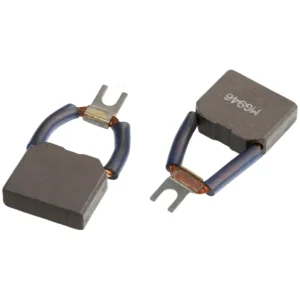
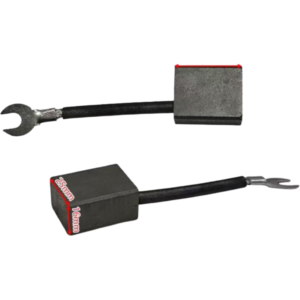
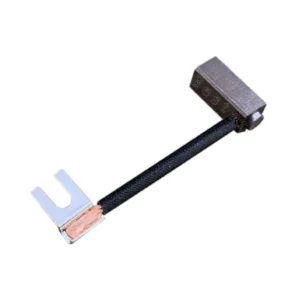
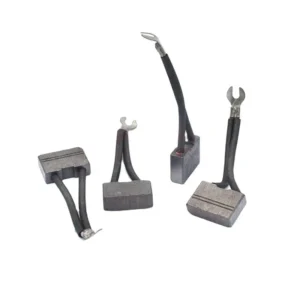
J201 copper-graphite carbon brush 8×22×22mm with integral copper shunt wire for DC motors. Half-copper sintered graphite composite (~50% Cu), 0.8-1.5V voltage drop, self-lubricating. For electric forklift traction motors, pallet truck drive motors, and electric tricycles. Sold individually.
J201 Copper-Graphite Carbon Brush 8×22×22mm — Forklift Electric Motor & Tricycle Application
The J201 copper-graphite carbon brush is a customized 8×22×22mm rectangular motor brush manufactured from a half-copper sintered graphite composite, designed for electric forklift traction motors, hydraulic pump motors, electric tricycles, and DC motor applications where high current density and low contact resistance are critical. Carbon brushes are the sliding electrical contacts that transfer current from the stationary brush holder to the rotating commutator or slip ring on the motor armature. The brush material composition directly determines the motor performance: pure graphite brushes provide excellent lubrication and low commutator wear but have higher electrical resistance (voltage drop of 1.5-2.5V per brush) that limits them to low-current applications. The J201 half-copper formulation — approximately 50% copper powder by weight mixed with graphite and sintering binders, pressed and fired into a solid block — reduces the voltage drop to 0.8-1.5V per brush, allowing higher current throughput for traction motor applications without excessive resistive heating at the brush-commutator interface. A voltage drop reduction of 1V across the four brushes in a typical DC traction motor translates to approximately 200-400 watts less heat dissipated at the commutator, directly reducing motor operating temperature and extending brush service life.
The J201 brush features a precision-ground 8×22×22mm rectangular cross-section with integral copper shunt wire (pigtail) for connecting to the brush holder terminal. The dimensional tolerance of ±0.1mm on all faces is critical — a brush that is oversized by even 0.2mm will bind in the brush holder, preventing the brush spring from maintaining contact pressure as the brush wears, causing arcing and commutator burning; a brush that is undersized will rock in the holder, chattering against the commutator segments and causing uneven wear and sparking. The copper shunt wire is crimped into a recessed pocket in the brush body rather than being riveted or screwed — the crimped connection provides a larger contact area and lower resistance than a mechanical rivet, and eliminates the risk of a loose rivet vibrating out and falling into the motor armature where it can short the commutator bars. The sintered graphite-copper composite provides self-lubricating properties that deposit a thin graphite film on the commutator surface, reducing friction and commutator bar wear compared to pure metal brushes that require separate lubrication.
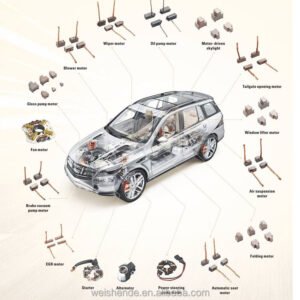
Universal application for DC motors requiring 8×22×22mm carbon brushes with copper shunt wires. Compatible with electric forklift traction motors, hydraulic pump motors, electric pallet truck drive motors, electric tricycles, and DC generator applications. For motor commutators, brush holders, brush springs, and insulation kits, browse our forklift carbon brush category. Sold individually — order in sets of 2 or 4 for complete motor brush replacement.
Technical Specifications
- Type: J201 copper-graphite carbon brush with shunt wire
- Dimensions: 8mm × 22mm × 22mm (±0.1mm)
- Material: Half-copper sintered graphite composite (~50% Cu)
- Voltage Drop: 0.8-1.5V per brush at rated current
- Shunt Connection: Integral copper pigtail, crimped into brush body
- Lubrication: Self-lubricating graphite film on commutator
- Application: DC traction motors, hydraulic pump motors, generators
- Quality: OEM-spec aftermarket replacement
Compatible Equipment
| Type | Application |
|---|---|
| Electric Forklift | DC traction motor, hydraulic pump motor |
| Electric Pallet Truck | Drive motor, lift pump motor |
| Electric Tricycle | DC hub or mid-drive motor |
| DC Generators | Slip ring and commutator applications |
Inspect carbon brushes every 500 operating hours: measure brush length from the commutator contact face to the shunt wire attachment point — replace when remaining brush length is below 10mm or when the wear indicator line (if present) is reached. Always replace all brushes in a motor as a complete set, even if only one brush is worn — mismatched old and new brushes have different contact resistance, causing unequal current sharing that will burn the commutator on the overloaded brush track. When installing new brushes, seat them to the commutator curvature by wrapping a strip of fine-grit sandpaper (180-240 grit) around the commutator with the abrasive side facing the brush, inserting the brush into the holder, and rotating the armature by hand 3-4 revolutions — this removes the flat brush face and creates a curved contact surface matching the commutator radius for full-face contact. After sanding, blow out all carbon dust from the motor with dry compressed air — carbon dust is electrically conductive and will cause tracking shorts between commutator bars if left in place. Run the motor at no-load for 30 minutes to allow the brush-commutator interface to develop the graphite film before applying full load. For DC motor maintenance procedures, consult Baldwin Filters. Kingstream stocks J201 carbon brushes for same-day dispatch — worldwide shipping with online tracking.
Find Similar Products
-
Forklift Carbon Brush
Forklift Carbon Brush J230 – 8.8×19.2x16mm Hydraulic Oil Pump Motor
$5.29 Add to cart -
Forklift Carbon Brush
Forklift Carbon Brush 8×9.5×19.5mm BST264103 – Copper Carbon
$0.49 Add to cart -
Forklift Electronic Control Parts
Forklift Carbon Brush J201 – 8x22x22mm 50% Copper
$2.00 Add to cart -
Forklift Carbon Brush
Forklift Steering Carbon Brush 8x30x25mm – Hyster LL10-H201G
$9.99 Add to cart
Request Forklift Parts Quotation
📦 Part Number
If you already have the OEM number or reference number, quotation and matching will usually be much faster.
🚜 Forklift Model or Serial
If the exact part number is not available, forklift model details can help narrow the correct product range.
📸 Product Photos
Clear old-part photos, labels or packaging images are useful when buyers need help confirming the correct part.
🌍 Quantity & Destination
Quantity, country and shipping terms help improve quotation structure for EXW, FOB or CIF comparison.
Reviews
There are no reviews yet.