
Forklift Torque converter
Categories
-
Forklift Hydraulic Transmission
3T TCM Torque Converter Forklift Accessories Forklift Torque Converter Assembly
$349.99 Add to cart -
Forklift Hydraulic Transmission
Forklift Parts Transmission Torque Converter for Tailift-4105-4108 (YJH3.15H-3A-TL)
$379.99 Add to cart -
Forklift Hydraulic Transmission
Transmission Torque Converter for FD50~100-Z7-Z8 6102-6BG1 Forklift Parts 15943-80211
$449.99 Add to cart

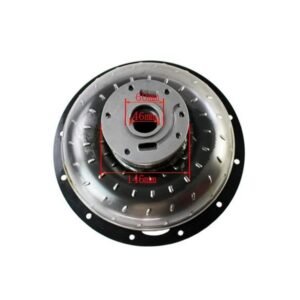

Forklift Torque Converter: Hydraulic Transmission Fluid Coupling for Diesel Forklifts
A forklift torque converter is the fluid coupling between the engine and the hydraulic transmission — it replaces a mechanical clutch by using hydraulic oil to transfer and multiply engine torque to the transmission input shaft. When a torque converter fails, the forklift moves sluggishly, cannot climb ramps under load, or overheats the transmission fluid to the point of burning seals and damaging clutch packs. Kingstream stocks replacement forklift torque converters for TCM, Tailift, HELI, Komatsu, and Toyota forklifts from 3 to 10 ton capacity. Every torque converter is inspected for hub runout and stator one-way clutch function before shipment.
How a Torque Converter Works
A forklift torque converter consists of three elements: the impeller connected to the engine flywheel that pumps transmission fluid outward, the turbine connected to the transmission input shaft that captures fluid energy and converts it to mechanical rotation, and the stator mounted on a one-way clutch between them that redirects returning fluid to multiply torque during acceleration. At idle, the impeller spins slowly enough that the fluid coupling transmits negligible torque to the turbine — the forklift stays stationary without a clutch pedal. As engine RPM increases, fluid velocity through the impeller rises and the turbine begins to rotate, initially with significant slip. The stator redirects the fluid returning from the turbine back into the impeller at an angle that adds to the impeller’s output, creating torque multiplication of up to 2:1 during acceleration. Once the turbine speed approaches impeller speed, the stator spins freely on its one-way clutch and the converter functions as a simple fluid coupling with near-zero slip. This built-in torque multiplication is why forklift hydraulic torque converters provide smoother starts and better load-handling than mechanical clutches.
Signs Your Torque Converter Is Failing
A failing forklift torque converter produces symptoms that are often mistaken for engine or transmission problems. The most common sign is loss of pulling power — the engine RPM rises normally but the forklift accelerates slowly or cannot climb ramps that it previously handled easily, indicating the converter is not multiplying torque. Overheating transmission fluid, often accompanied by a burnt smell and darkened oil on the dipstick, is caused by excessive slippage inside the converter that converts engine power into heat instead of motion. A metallic rattling or grinding noise from the bell housing that changes with engine RPM suggests a failed stator one-way clutch or damaged impeller blades — the stator rattles because it can no longer lock and redirect fluid. In severe cases, metal particles from a disintegrating converter contaminate the entire transmission hydraulic system, requiring not just a forklift torque converter replacement but a complete transmission flush, filter change, and valve body cleaning. Never continue operating a forklift with a suspected converter failure — the metal debris it generates will destroy the transmission pump and control valves.
Popular Torque Converter Cross-Reference
| OEM / Model | Application | Compatible Models |
|---|---|---|
| YJH3.15H-3A-TL | Hydraulic transmission | Tailift 4105-4108, 3-3.5T |
| 15943-80211 | Heavy-duty | FD50-100 Z7-Z8, 6102-6BG1 engine, 5-10T |
| 3T TCM | Standard | TCM 3T forklifts |
Need a converter not listed? Send us your engine and transmission model and we will match the correct forklift torque converter.
Quality Control at Kingstream
Every forklift torque converter we ship is inspected for critical dimensions and mechanical function. Hub runout is measured at the impeller and turbine mounting faces — excessive runout causes vibration that damages the transmission input bearing and pump drive. The stator one-way clutch is tested by locking the stator in one direction and confirming free rotation in the opposite direction — a seized or slipping one-way clutch eliminates torque multiplication and causes overheating. The converter is pressure-tested for housing weld integrity to confirm no pinhole leaks that would allow fluid loss and air ingestion. Internal clearance between the impeller, turbine, and stator is checked to ensure no blade contact during thermal expansion. For forklift torque converter assemblies, the pilot diameter and flexplate mounting bolt circle are measured against OEM specifications to guarantee bolt-on fitment. You receive a torque converter that multiplies torque from the first acceleration — not one that slips, overheats, and sends metal through your transmission.
Forklift losing power under load? Send us your model details for a fast quote on forklift torque converters. For other transmission parts, browse our complete forklift hydraulic transmission parts catalog.
8 Product Categories In Stock
Engine, brake, hydraulic, electrical, steering & axle, cooling system, transmission, and maintenance parts — one partner for all your forklift spare parts needs.
OEM Cross-Reference Matching
Send us an OEM number, part photo, or forklift model. We cross-match against our database before quoting — no guesswork, no wrong parts shipped.
Global Shipping to 78+ Countries
Express courier (3-5 days) or sea freight for bulk orders. Export packing included. Tracked shipping on all orders. Typical lead time: 24h for in-stock items.
Can't Find What You Need?
We offer 24h service — send us your part number or inquiry and we'll get back to you within 24 hours.