
TL;DR
Match the charger’s output voltage to the battery first, then confirm amps, chemistry, connector, communication and available AC input before requesting a quote.
Abstract
A forklift battery charger must match the battery’s nominal voltage, chemistry, capacity, connector and control requirements. This guide turns those checks into a short buying sequence using verified charger examples from Kingstream’s catalog.
Key Takeaways
- Confirm nominal battery voltage before comparing charger amperage.
- Use battery capacity and duty cycle to evaluate charging current, not the charger label alone.
- Lithium batteries may require CAN Bus or BMS communication and a compatible charging profile.
- Verify the connector, plug polarity, input phase and truck or battery model before purchase.
- Send the battery label, charger label, connector photo and operating details with the quote request.
Table of Contents
- Abstract
- Key Takeaways
- What Is a Forklift Battery Charger?
- How to Match Charger Voltage and Battery Capacity
- Charger Amps, Charging Profiles, and Input Power
- Lithium vs Lead-Acid Forklift Charger Compatibility
- Forklift Charger Connectors, CAN Bus, and Fitment Checks
- Common Forklift Battery Charger Problems and Safe Checks
- Frequently Asked Questions
- Conclusion
- References
What Is a Forklift Battery Charger?
A forklift battery charger is an industrial power-conversion unit that turns facility AC power into controlled DC output for an electric lift-truck battery. The correct charger must match the battery’s nominal voltage and chemistry, then be checked for output current, charging profile, connector, communication system and available input power. A plug that fits is not enough.
What the charger controls
The charger controls how energy reaches the battery. Older ferroresonant units may use a robust transformer-based design, while high-frequency units use electronic switching to regulate output. The design matters, but the nameplate still comes first. A charger marketed for a 48V battery is not automatically suitable for every 48V pack because capacity, chemistry and control requirements can differ.
For lead-acid batteries, the charger profile must suit the battery construction and the fleet’s charging routine. Equalization, ventilation and cool-down requirements are service considerations, not optional marketing features. For lithium packs, the charger may need a defined CC/CV profile and a communication path to the battery management system. Follow the battery and charger manufacturer instructions for setup and service.
Why voltage is the first check
Nominal voltage is the fastest way to remove an incompatible charger from a buying list. Record the voltage printed on the battery label, not only the truck model. Common industrial categories include 24V, 36V, 48V and 80V, but the available charger output must be confirmed against the actual battery.
Do not confuse AC input voltage with DC charging voltage. A charger can accept 220V AC while delivering 24V DC, or use a different facility input for a higher-output system. The input phase and plug arrangement also affect installation. Ask for both sides of the nameplate when requesting a quote.
Citation capsule: A forklift battery charger converts facility power into controlled battery charging output, but a matching plug does not prove compatibility. The voltage, chemistry, charging profile, connector and input supply must be checked against the battery and charger labels before purchase. OSHA’s powered industrial truck rules identify battery charging as a controlled operating activity (Occupational Safety and Health Administration, 2026).
Glossary
- Nominal voltage: The battery system voltage used to match the charger output category.
- Amp-hour capacity: The battery capacity value used with duty cycle to assess charging current.
- CC/CV profile: Constant-current and constant-voltage charging stages commonly associated with lithium charging systems.
- BMS: Battery management system that monitors and controls a lithium battery pack.
- REMA connector: A common industrial battery charging connector family that still requires exact fitment and polarity verification.
Start with the voltage and nameplate fields above. The next step is to compare voltage and capacity together, because a correct voltage alone does not tell you whether the charger fits the work schedule.
How to Match Charger Voltage and Battery Capacity
The safe matching sequence is simple: read the battery voltage, identify the battery capacity, confirm the charger output range, then compare current with the available charging window. This sequence answers the Google question, “How do I know what kind of battery charger I need for my forklift?” without reducing the decision to a truck brand or connector shape.
24V, 48V and 80V examples
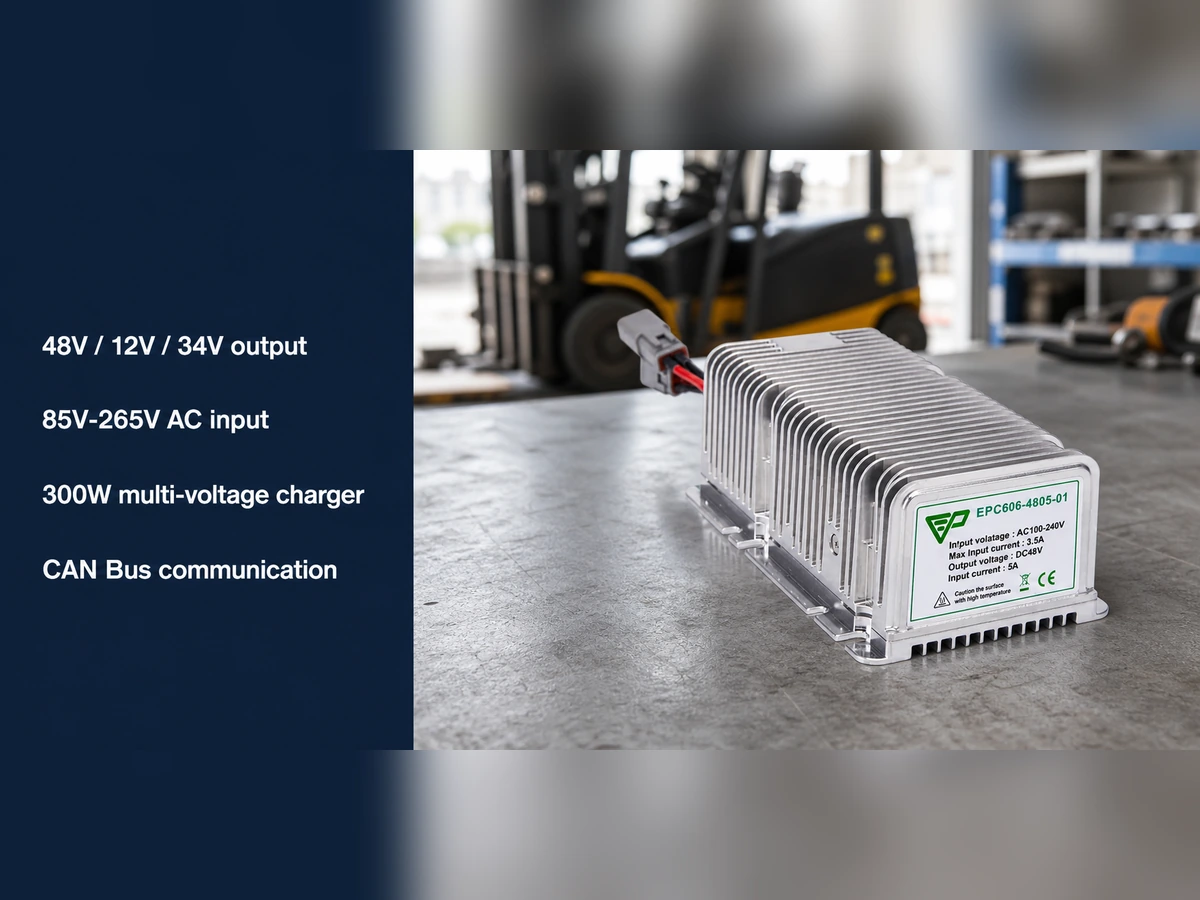
Use the battery nameplate as the controlling reference. Kingstream’s local charger catalog includes products for several voltage and current combinations, including a 24V/10A HELI unit, 48V/60A and 48V/100A units, a multi-voltage EPC4805, and a 24V to 80V lithium charger. These are product examples, not proof that any one model fits an unverified truck.
| Battery label | Charger output to check | Catalog example | Buyer action |
|---|---|---|---|
| 24V | 24V DC output | 24V/10A HELI charger | Confirm chemistry, profile and plug |
| 48V | 48V DC output | 48V/60A or 48V/100A | Compare Ah rating and charge window |
| 80V | 80V DC output | 24V-80V lithium charger | Confirm BMS and connector |
| Multi-voltage | Each supported output | 48V/12V/34V EPC4805 | Confirm selected mode before use |
The table narrows the search, but it does not replace a nameplate check. A 48V charger can be wrong because its current, algorithm, connector or AC input does not suit the battery. A multi-voltage charger can also be misused if the selected mode is not verified before connection.
Use amp-hours and duty cycle together
Battery capacity is normally expressed in amp-hours. The charger current should be considered against that capacity, the battery chemistry and the time available between shifts. A small charger may be electrically compatible but too slow for the fleet’s schedule. A high-current charger may also be unsuitable if the battery, profile or thermal management system does not support it.
Record four details before comparing amperage:
- battery voltage and amp-hour rating;
- battery chemistry and manufacturer;
- hours available for charging and cooling;
- charger output current and charge profile.
Do not calculate a guaranteed charge time from a catalog headline alone. Charging losses, battery condition, temperature and tapering near full charge all affect the result. A supplier needs the complete battery label and operating pattern to recommend a realistic replacement.
Citation capsule: The local Kingstream charger catalog covers verified examples from 24V/10A and 48V/60A through 48V/100A, plus a 24V-80V lithium unit. Those numbers describe listed products, not universal fitment. A buyer must match nominal voltage first, then confirm battery capacity, chemistry, connector and charging window (Kingstream Parts, 2026).
The practical outcome is a shorter, safer shortlist. Send the battery label, charger label and connector photo together so the quote checks output voltage and current against the actual application rather than a guessed forklift model.
Where we can help
Need OEM or aftermarket forklift parts for your fleet? Get a quote from Kingstream and our parts specialists will match the right component for your lift truck make and model.
Charger Amps, Charging Profiles, and Input Power
Once voltage is confirmed, compare the charger’s output current with the battery’s amp-hour rating and the fleet’s charging window. Then check the charging profile and the AC supply available at the site. These are separate questions. A charger can have the correct DC voltage yet still be a poor replacement because it charges too slowly, uses the wrong profile or needs an input supply the facility does not have.
How to think about charging current
Amps describe the rate of current delivered during charging, but the useful buying question is whether the rate suits the battery and operating cycle. Compare the charger output with the battery capacity, the number of shifts, the opportunity-charge plan and the required cool-down period. The battery maker’s charging instructions remain the authority for the acceptable range.
A 48V/60A charger and a 48V/100A charger are not interchangeable simply because their voltage matches. The 100A unit may suit a larger battery or a shorter charging window, while the 60A unit may be the safer match for a smaller pack. Actual selection requires the battery Ah rating and chemistry, not a guess based on truck size.
Charging profiles also matter. Lead-acid systems may use staged charging and may require equalization according to the battery manufacturer. Lithium systems commonly depend on controlled charging and may exchange information with a BMS. A unit described as automatic still needs confirmation of the battery type and programmed profile.
Single-phase and three-phase input
Read the input side of the charger nameplate separately from the output side. Confirm facility voltage, phase, frequency, breaker requirements and the charger input connector. A replacement that is correct on the battery side can still be unusable if the building cannot provide its required AC input.
Charging check: Ask the supplier to confirm output voltage, maximum current, battery chemistry, charge profile, AC input and connector in the same written quote. This simple six-field check is more useful than comparing “fast” or “heavy-duty” labels.
The catalog illustrates why this matters: the EPC4805 is listed as a 300W multi-voltage charger, while the larger lithium unit is listed at 2400W and 100A-200A. Those figures identify different product classes; they do not establish a universal charge-time promise (Kingstream Parts, 2026).
If the site input is unknown, photograph the existing charger’s input label and facility plug. That evidence lets a supplier check the electrical side before you order.
Lithium vs Lead-Acid Forklift Charger Compatibility
A charger for a lithium forklift battery is not automatically a substitute for a lead-acid charger, even when both batteries share the same nominal voltage. Chemistry changes the charging profile, control logic, thermal expectations and communication requirements. Confirm the battery type first, then verify the charger documentation and connector before treating a model as compatible.
Charging profile and battery chemistry
Lead-acid batteries are commonly charged with a staged profile that may include bulk charging, absorption and a manufacturer-defined finishing or equalization routine. Ventilation, water checks and charging-area procedures also matter for flooded batteries. AGM or other sealed constructions can have different requirements, so “lead-acid” is still not a complete specification.
Lithium packs often use a controlled profile such as CC/CV and may require limits set by the battery management system. A lithium charger can be a good match only when its voltage range, current range and control method align with the battery pack. Do not apply a lead-acid equalization routine to a lithium battery unless the battery manufacturer explicitly allows it.
| Battery type | Verify first | Common mismatch risk | Quote evidence |
|---|---|---|---|
| Flooded lead-acid | Voltage, Ah, profile, ventilation plan | Wrong charge stage or unsuitable current | Battery label and charger profile |
| Sealed lead-acid | Voltage, Ah and approved profile | Treating it like a different lead-acid design | Battery model and manual |
| LiFePO4 lithium | Voltage, current, BMS and connector | Missing communication or wrong charge limits | Battery label and BMS details |
CAN Bus and BMS communication
Some lithium charger listings specify CAN Bus or BMS communication. That feature is not a decorative add-on. It can be part of the control path between the charger and battery. Confirm the communication requirement, connector pinout and protocol with the battery supplier. A plug that physically fits can still fail to establish the expected handshake.
Kingstream’s verified catalog includes a 24V-80V, 100A-200A lithium charger listing with CAN Bus BMS communication and a REMA plug. It also lists the EPC4805 as supporting LiFePO4, lithium and lead-acid use. These descriptions must be checked against the battery model before ordering because product compatibility is still application-specific (Kingstream Parts, 2026).
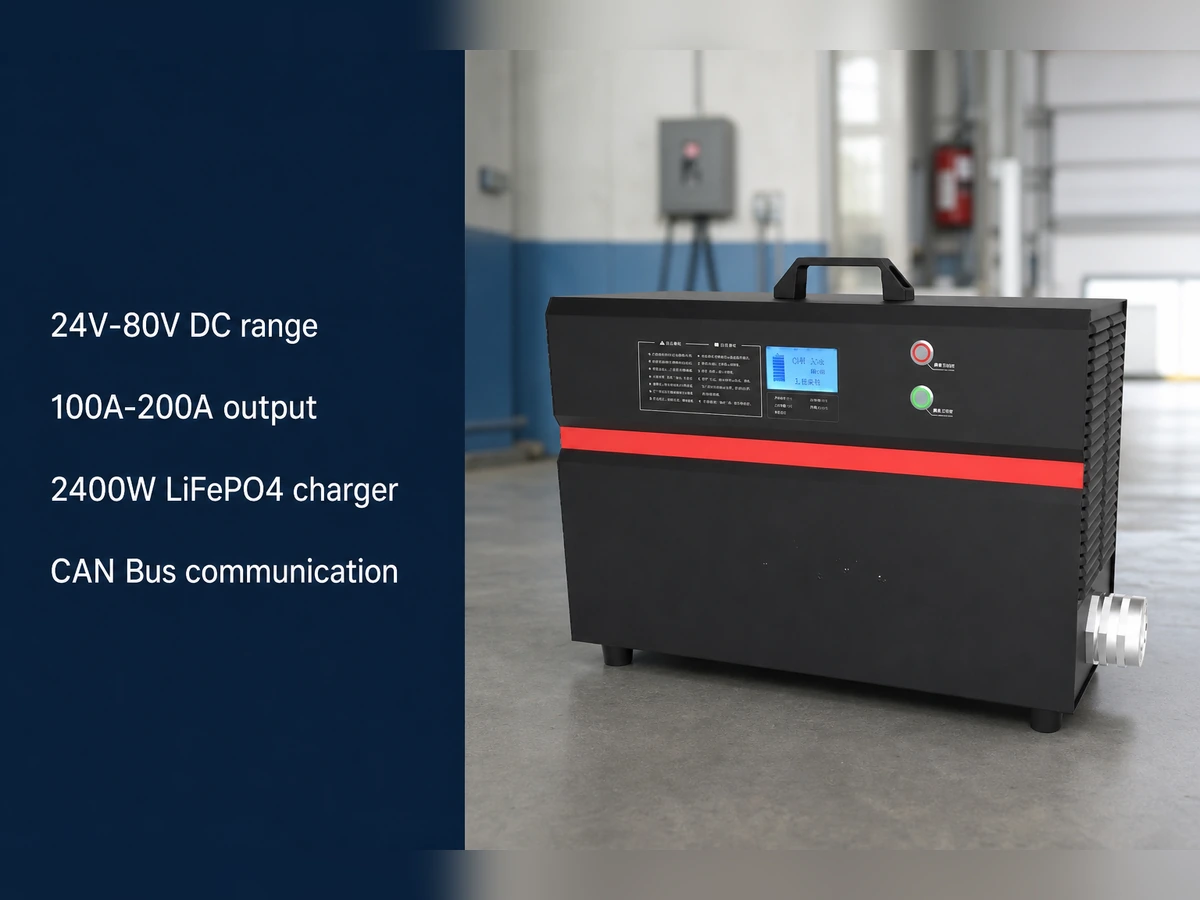
Citation capsule: Lithium and lead-acid forklift batteries require different compatibility checks even at the same nominal voltage. Verify chemistry, voltage, current, charging profile, communication and connector together. The Kingstream catalog lists a lithium charger with CAN Bus BMS communication and a REMA plug, but the product listing does not replace battery-manufacturer confirmation.
When chemistry is unclear, stop the comparison at the catalog stage. Send the battery model and charger label to a qualified supplier instead of testing an unknown profile on an installed pack.
Forklift Charger Connectors, CAN Bus, and Fitment Checks
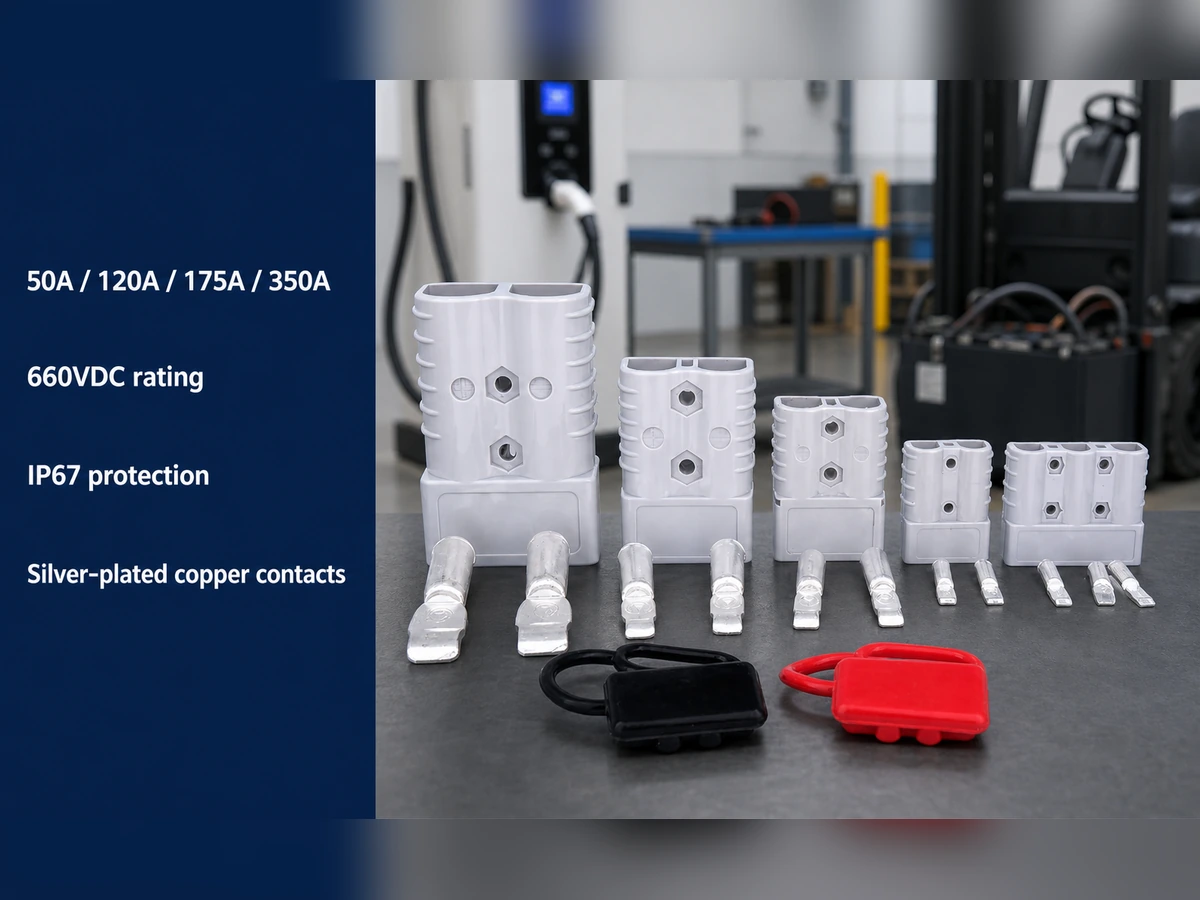
Physical fitment is the final confirmation layer, not the first one. A forklift charger connector must match the battery-side connection, polarity, current rating and any communication contacts. The charger must also suit the available AC input and the battery’s operating requirements. Use a written checklist and photos before a supplier prepares a quote.
Connector and polarity verification
Photograph the connector from the front and side, including the cable entry and any model marking. Record the number of contacts, keying, latch arrangement and cable size if visible. Do not rely on color alone. Confirm positive and negative orientation from the charger or battery documentation, and do not probe an unknown connector while it is energized.
If a REMA connector is listed, verify the exact connector family and pin arrangement. “REMA” identifies a connector family, not every possible wiring configuration. A connector replacement may also change the current rating or communication path, so it should be treated as a fitment part rather than a cosmetic accessory.
Model, plug and enclosure details
| Fitment field | What to record | Why it matters |
|---|---|---|
| Battery | Brand, model, voltage, Ah, chemistry | Defines the charging target |
| Charger | Model, output voltage, amps, profile | Defines the output and control |
| Connector | Family, keying, pins, polarity | Prevents physical and electrical mismatch |
| Input | AC voltage, phase, plug and breaker | Confirms site installation fit |
| Communication | CAN Bus, BMS or none | Confirms control compatibility |
| Environment | Indoor/outdoor, dust, heat and enclosure | Helps assess enclosure requirements |
Use the truck model as a cross-check, not as the only identifier. Fleets can be rebuilt, batteries can be changed and chargers can be moved between work areas. The battery label and existing charger label are stronger evidence for a replacement quote.
Fitment checklist: before ordering, send the battery and charger labels, connector photos, AC input details, battery chemistry, Ah rating, truck model and the required charge window. Ask the supplier to reply with each item marked confirmed, unknown or not applicable.
This process is especially important for multi-voltage equipment. The EPC4805 listing includes 48V, 12V and 34V outputs, while the lithium listing spans 24V to 80V. Confirm the selected output mode and connector before installation rather than assuming every listed range is active at once (Kingstream Parts, 2026).
Citation capsule: A forklift charger fitment check should confirm the battery label, charger output, connector polarity, AC input and communication path as separate fields. Kingstream’s catalog lists both a 48V/12V/34V multi-voltage charger and a 24V-80V lithium charger, so the selected mode must be confirmed before connection (Kingstream Parts, 2026).
Common Forklift Battery Charger Problems and Safe Checks
When a forklift battery charger does not work, check setup and compatibility before ordering a replacement. Confirm the facility input, charger mode, connector seating, battery voltage and visible fault code. If the unit shows heat damage, exposed conductors, smoke, arcing or a damaged battery, stop and send it to a qualified technician.
Charger does not start
Start with the non-invasive checks:
- confirm the AC disconnect and facility breaker are on;
- check that the input plug is fully seated and undamaged;
- verify the charger’s output mode matches the battery label;
- inspect the connector for bent, burned or loose contacts;
- read the display or fault indicator before cycling power repeatedly.
Battery will not accept a charge
Compare the battery voltage and chemistry with the charger settings. A dead or deeply discharged battery may not be recognized by every charger. A lithium pack may also require BMS communication before the charger will begin. Check the manufacturer’s recovery procedure instead of bypassing a protection circuit.
Safety callout: Do not open a charger, bridge a fuse, bypass a BMS or change internal settings unless the manufacturer procedure and a qualified technician authorize that work. Electrical charging equipment can contain hazardous voltage after disconnection.
When to stop testing
Stop when the charger or battery becomes unusually hot, smells burnt, shows swelling, leaks electrolyte or produces sparks. Record the symptom, fault code, battery label and charger model. That information is more useful to a supplier or technician than repeatedly connecting an unknown replacement.
If the checks point to a simple connector or input issue, correct that issue and retest under the documented procedure. If the symptoms point to a chemistry, voltage or BMS mismatch, resolve fitment before replacing parts.
Citation capsule: OSHA’s powered industrial truck rule, 29 CFR 1910.178, treats battery charging as a controlled operating activity. A charger that will not start should therefore be handled through documented input, mode, connector and battery checks, with damaged equipment removed from service instead of opened or bypassed by an unqualified operator (Occupational Safety and Health Administration, 2026).
Frequently Asked Questions
How do I know what kind of battery charger I need for my forklift?
Read the battery label first. Record nominal voltage, amp-hour capacity, chemistry, model and connector. Then match those details to the charger output voltage, current range, charging profile, input supply and communication requirements. The truck model is useful as a cross-check, but it should not replace battery and charger nameplate evidence.
How do you charge a forklift battery?
Follow the battery and charger manufacturer procedure. Park in the designated charging area, inspect the cable and connector, confirm the charger setting, connect the battery and monitor the charger for its normal completion indication. Lead-acid batteries require appropriate ventilation and handling procedures. Do not use a charger with an unverified voltage or chemistry profile.
What is a good 48 volt battery charger for a forklift?
A good 48V charger is one that matches the battery’s chemistry, Ah capacity, connector, charge profile, AC input and required charging window. Kingstream’s catalog includes 48V/60A and 48V/100A listings, but those current ratings are not a universal recommendation. The battery label and duty cycle must be checked before selecting either class (Kingstream Parts, 2026).
How can I charge a dead forklift battery?
First determine whether the battery is merely discharged or has entered a protection or fault condition. Check the manufacturer’s recovery instructions and the charger’s fault display. Do not bypass the BMS, connect an unknown charger or improvise a high-current recovery method. A qualified battery or charger technician should handle a pack that is damaged, swollen, leaking or not recognized.
Can I use a 48V charger on a 24V forklift battery?
No. Do not connect a 48V output to a 24V battery unless the equipment documentation explicitly defines a controlled multi-voltage mode and confirms the selected setting. The output mode must be verified before connection. A multi-voltage label does not mean every output is safe for every battery.
Citation capsule: The Google PAA questions for forklift battery chargers center on charger selection, charging procedure, 48V choice, dead batteries and voltage mismatch. The safe answer is consistent across all five: verify voltage and chemistry first, then confirm current, profile, connector and input requirements. Manufacturer instructions govern charging and recovery decisions.
The fastest quote is usually the most complete one. Send the battery label, charger label, connector photos, chemistry, Ah rating and facility input details together so the supplier can confirm fitment before pricing.
Conclusion
Match a forklift battery charger from the battery nameplate outward: verify voltage, capacity, chemistry, current, charging profile, connector, communication and facility input before comparing price. The Kingstream catalog provides useful 24V, 48V, 80V and multi-voltage examples, but a listed range is not a substitute for application fitment. When any label, polarity or BMS requirement is unclear, send the complete evidence set with your quote request instead of testing an unknown charger.
References
- Occupational Safety and Health Administration. (2026). Powered industrial trucks (29 CFR 1910.178). U.S. Department of Labor. https://www.osha.gov/laws-regs/regulations/standardnumber/1910/1910.178
- Kingstream Parts. (2026). Forklift battery charger product category. Kingstream Parts. https://kingstreamparts.com/product-category/forklift-battery-charger-ecp/
- Kingstream Parts. (2026). Forklift multi-voltage battery charger EPC4805. Kingstream Parts. https://kingstreamparts.com/product/forklift-charger-epc4805-multi/
- Kingstream Parts. (2026). LiFePO4 forklift battery charger, 24V-80V, 100A-200A. Kingstream Parts. https://kingstreamparts.com/product/lifepo4-forklift-charger-24-80v/
- Kingstream Parts. (2026). HELI forklift battery charger GBCH24V, 24V 10A. Kingstream Parts. https://kingstreamparts.com/product/heli-battery-charger-gbch24v-10a/
- Kingstream Parts. (2026). Linde 48V 100A automatic IGBT battery charger. Kingstream Parts. https://kingstreamparts.com/product/linde-48v-100a-battery-charger/
Last reviewed and updated: August 2026. Author: Kingstream team. For tailored guidance, contact our team.